


Choosing between a custom WordPress theme and a pre-built template is a decision that shapes how your website looks, performs, and supports your business over time. This choice influences branding, speed, scalability, and how confidently users engage with your content.
If you are building a website that needs to grow with your business, understanding the differences early helps you avoid costly rebuilds later.
Understanding the Two Options
Before comparing benefits, it helps to clarify what each option truly means.
What Is a Custom WordPress Theme?
A custom WordPress theme is designed and developed specifically for your website. Every element is built around your brand, your audience, and your goals. Nothing is added by accident, and nothing is included unless it serves a clear purpose.
Custom themes are built on WordPress and are often delivered through professional wordpress website development services that focus on performance, usability, and long-term stability rather than shortcuts.
What Is a WordPress Template?
A WordPress template, often called a premium or pre-built theme, is a ready-made design created to serve many industries at once. You install it, adjust colors and layouts, and launch relatively quickly.
Templates are popular because they offer speed and affordability, but they also introduce limitations that become more visible as your website evolves.
Design Freedom and Brand Identity
Custom Themes
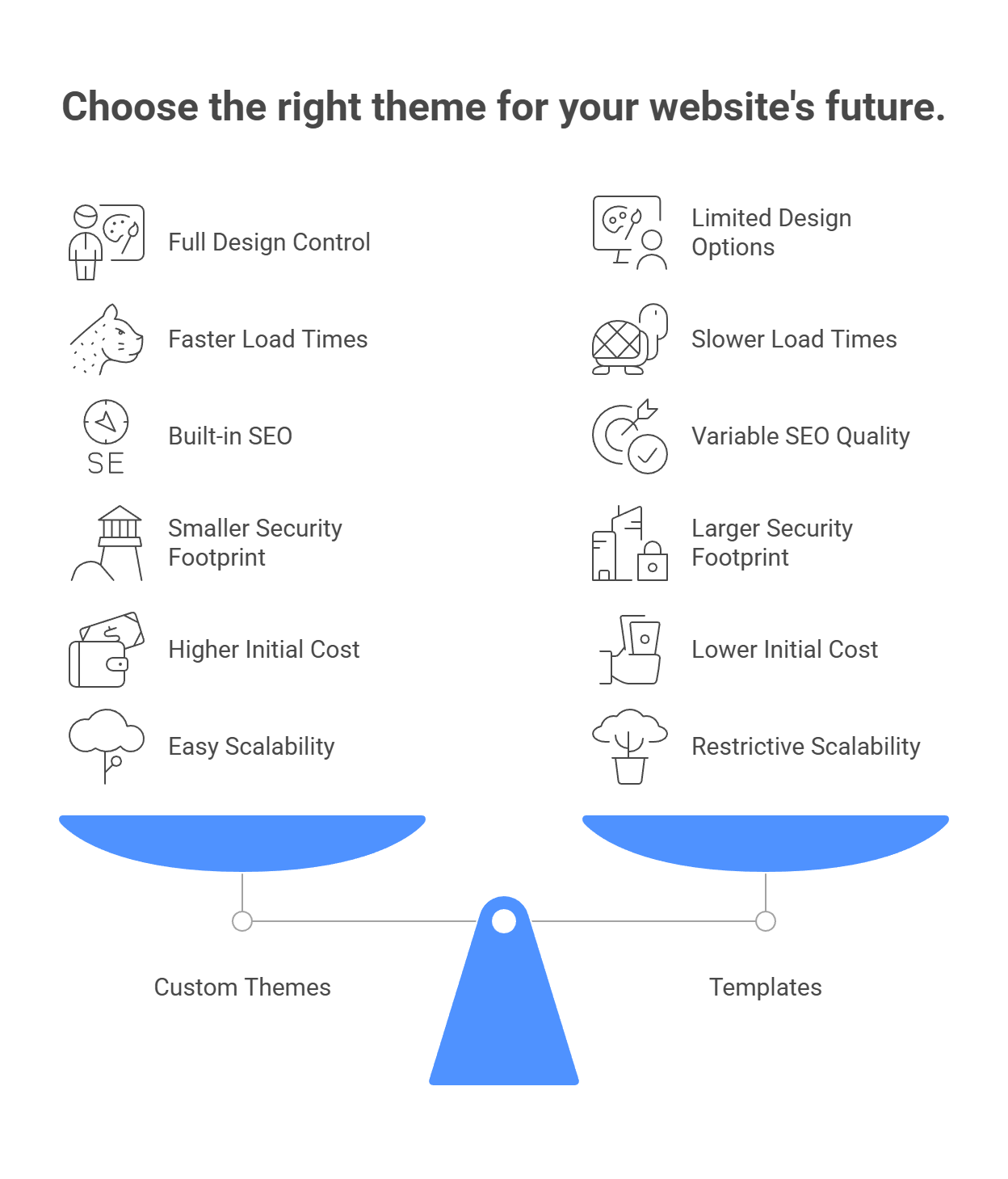
Custom themes give you full control over how your brand is presented.
- Visual identity created specifically for your business
- User journeys aligned with real customer behavior
- No unnecessary layouts or features
Many companies choose this path when they decide to hire wordpress developer expertise to translate their brand vision into a website that feels intentional and trustworthy.
Templates
Templates are built to appeal to a broad audience.
- Design options are limited to theme settings
- Many businesses end up with similar-looking websites
- Deeper customization can be restrictive
Templates work best when speed matters more than originality.
Performance and Website Speed
Speed plays a major role in user experience, conversions, and trust.
Insight: Industry data consistently shows that more than half of users abandon websites that take longer than three seconds to load. Faster sites keep visitors engaged and reduce bounce rates.
Custom Themes
Custom themes are typically faster because they include only what your site actually uses.
- Cleaner and lighter code
- Faster load times across devices
- Better performance metrics
This directly improves how users interact with your site.
Templates
Templates often come packed with features meant for many use cases.
- Extra scripts and styles that go unused
- Heavier page sizes
- Dependence on optimization plugins
Performance improvements are possible, but they usually require additional effort.
SEO and Search Visibility
Custom Themes
With a custom theme, SEO can be built into the foundation.
- Clear heading structure
- Optimized page layouts
- Strong mobile and accessibility support
When paired with professional SEO services in USA custom themes provide a clean technical base that helps search engines understand and rank your content more effectively.
Templates
Templates may advertise SEO readiness, but results vary widely.
- SEO quality depends on the theme’s code
- Page builders can add unnecessary markup
- Additional plugins are often required
Templates can rank well, but they demand more ongoing fine-tuning.
Security and Long-Term Maintenance
Custom Themes
Custom themes usually have a smaller security footprint.
- No bundled features you do not need
- Fewer third-party dependencies
- Easier updates and maintenance
This makes them a strong option for business-critical websites.
Templates
Popular templates are widely used and more frequently targeted.
- Security depends on the theme developer
- Updates can sometimes break layouts
- Plugin conflicts are more common
Maintenance can become more complex over time.
Cost Considerations Beyond the Launch
Templates
Templates are appealing for short-term budgets.
- Lower upfront cost
- Faster launch
- Suitable for simple or temporary websites
Over time, customization needs and plugin licenses can increase total costs.
Custom Themes
Custom themes require a higher initial investment but often deliver better long-term value, especially when common WordPress Development Challenges such as performance bottlenecks, plugin conflicts, and rigid layouts are considered early in the process.
- Fewer fixes and workarounds
- Better performance without excess plugins
- Built to support growth
Many businesses eventually move to custom themes after outgrowing the limitations and technical constraints that templates can introduce over time.
Scalability and Future Growth
Custom Themes
Custom themes are designed with flexibility in mind.
- Easy to add features as needs change
- No layout restrictions as content expands
- Better support for advanced functionality
They are ideal for businesses planning steady growth.
Templates
Templates can feel restrictive as your website evolves.
- Layout limitations become more noticeable
- Performance can decline with added features
- Custom functionality may be harder to implement
What works today may not work well a year from now.
Which Option Is Right for You?
The right choice depends on your goals and timeline.
A template may be suitable if:
- You need a site quickly
- Budget is limited
- The website is simple and informational
A custom theme is often the better option if:
- Brand differentiation matters
- Performance and SEO are priorities
- You plan to scale
Final Thoughts
Templates offer speed and affordability, while custom WordPress themes provide control, performance, and long-term value. The best decision is not about the lowest initial cost but about choosing a foundation that supports future growth.
A website is not just a design asset. It is a business tool that builds trust and drives results. Choosing the right approach from the start makes everything that follows smoother and more effective.