Global supply chains are becoming more complex every year. Rising customer expectations, fluctuating demand, transportation delays, labor shortages, and geopolitical disruptions have made traditional supply chain models less effective. Businesses are now turning to predictive AI to improve visibility, reduce risks, and make faster decisions.
Predictive AI is transforming supply chain management by analyzing historical data, identifying patterns, and forecasting future outcomes with remarkable accuracy. From inventory planning to route optimization, artificial intelligence is helping companies create smarter and more resilient supply chains.
According to recent industry reports, AI adoption in supply chain operations is expected to grow rapidly over the next few years, with organizations reporting cost reductions of up to 20% and forecasting accuracy improvements of nearly 50%. These numbers show why predictive AI is becoming essential rather than optional.
What is Predictive AI in Supply Chain Management?
Predictive AI uses machine learning algorithms, historical datasets, and real time analytics to forecast future supply chain events. Instead of reacting to disruptions after they happen, businesses can anticipate issues and take proactive measures.
Predictive AI systems analyze massive amounts of data, including:
- Customer buying behavior
- Weather conditions
- Traffic patterns
- Inventory levels
- Supplier performance
- Market trends
- Shipping timelines
The goal is simple: make supply chains faster, smarter, and more efficient.
A modern Supply Chain Software Development Company often integrates predictive AI capabilities into enterprise platforms to help organizations automate operations and improve decision making across the entire logistics network.
Why Traditional Supply Chains Struggle Today
Conventional supply chain systems rely heavily on manual planning and historical assumptions. This creates several limitations:
- Delayed responses to disruptions
- Overstocking or understocking inventory
- Inefficient warehouse operations
- Poor demand forecasting
- Lack of real time visibility
- Higher operational costs
The pandemic exposed many of these weaknesses. Companies across industries experienced severe shortages, shipping delays, and inventory imbalances. Businesses realized they needed intelligent systems capable of adapting quickly to changing conditions.
Predictive AI addresses these challenges by turning raw operational data into actionable insights.
Key Ways Predictive AI is Transforming Supply Chains
1. Smarter Demand Forecasting
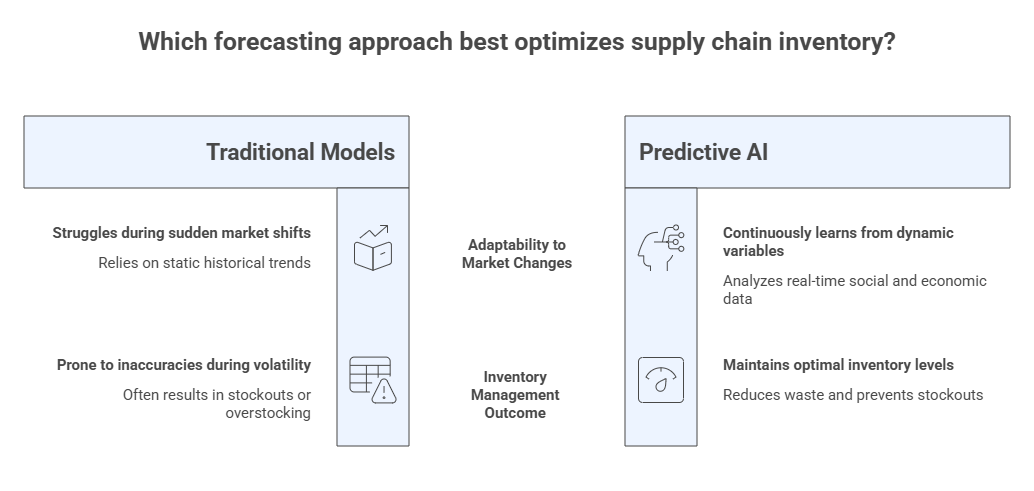
One of the biggest advantages of predictive AI is accurate demand forecasting. Traditional forecasting models often fail during sudden market changes because they depend on static historical trends.
AI powered systems continuously learn from:
- Seasonal buying patterns
- Economic conditions
- Social media trends
- Customer behavior
- Competitor activity
This enables businesses to predict customer demand more accurately and maintain optimal inventory levels.
For example, major retail brands use predictive AI to forecast shopping trends during peak seasons. Instead of relying solely on previous year sales, AI models analyze current market behavior in real time to improve stocking decisions.
The result is:
- Fewer stockouts
- Reduced waste
- Higher customer satisfaction
2. Inventory Optimization
Maintaining excess inventory increases storage costs, while insufficient inventory leads to lost sales. Predictive AI helps businesses find the right balance.
AI systems monitor inventory movement across warehouses and predict future stock requirements. This allows companies to:
- Reduce carrying costs
- Improve warehouse efficiency
- Prevent inventory shortages
- Minimize product expiration risks
Large ecommerce companies already use predictive analytics to position products closer to customers before demand spikes occur.
This proactive strategy significantly reduces delivery times and operational expenses.
3. Intelligent Route Planning and Logistics
Transportation is one of the most expensive parts of supply chain operations. Predictive AI improves logistics efficiency by analyzing traffic, weather, fuel costs, and delivery schedules.
Modern Logistics Software Development Services increasingly rely on AI driven route optimization tools to help businesses reduce delivery delays and improve fleet management.
AI powered logistics platforms can:
- Identify the fastest delivery routes
- Predict shipment delays
- Optimize fuel usage
- Reduce transportation costs
- Improve last mile delivery performance
For instance, global courier companies use predictive algorithms to dynamically reroute vehicles during traffic congestion or severe weather conditions.
This level of automation improves both operational efficiency and customer experience.
Table: How Predictive AI Improves Supply Chain Operations
| Supply Chain Area | Traditional Approach | Predictive AI Approach | Key Benefit |
| Demand Forecasting | Historical estimates | Real time predictive analytics | Better accuracy |
| Inventory Management | Manual stock planning | Automated inventory predictions | Reduced waste |
| Logistics & Delivery | Fixed route planning | Dynamic route optimization | Faster deliveries |
| Supplier Management | Reactive issue handling | Risk prediction and alerts | Fewer disruptions |
| Equipment Maintenance | Scheduled maintenance | Predictive maintenance models | Reduced downtime |
| Customer Experience | Delayed responses | Real time updates and tracking | Higher satisfaction |
4. Supplier Risk Management
Supply chain disruptions often begin at the supplier level. Predictive AI helps businesses evaluate supplier reliability and identify potential risks before they impact operations.
AI models analyze supplier data such as:
- Delivery performance
- Financial stability
- Compliance history
- Market reputation
- Regional risks
If the system detects unusual patterns, businesses can take preventive action by sourcing alternative suppliers or adjusting inventory plans.
This creates stronger and more resilient supply chain ecosystems.
5. Predictive Maintenance for Equipment
Manufacturing and warehouse equipment failures can lead to costly downtime. Predictive AI uses sensor data and machine learning to forecast maintenance needs before breakdowns occur.
This approach allows businesses to:
- Schedule maintenance proactively
- Extend equipment lifespan
- Reduce repair costs
- Prevent production delays
Manufacturers using predictive maintenance strategies report significant reductions in unplanned downtime and operational disruptions.
Industry Trends Driving Predictive AI Adoption
Increased Investment in AI Technologies
Organizations worldwide are investing heavily in AI driven supply chain technologies. Companies recognize that automation and predictive analytics are essential for long term competitiveness.
Businesses are increasingly seeking AI Software Development Services USA to build customized predictive analytics platforms tailored to their operational requirements.
These solutions help enterprises improve agility, automate workflows, and enhance data driven decision making.
Rise of Real Time Data Analytics
The availability of IoT devices, cloud computing, and connected systems has made real time supply chain monitoring possible.
AI platforms can now process live data from:
- Smart warehouses
- Delivery vehicles
- GPS systems
- Sensors
- Inventory tracking devices
This creates a more transparent and responsive supply chain environment.
Growth of Autonomous Supply Chains
The future of supply chain management is moving toward autonomous operations where AI systems can make decisions with minimal human intervention.
Examples include:
- Automated warehouse robots
- Self optimizing inventory systems
- AI powered procurement platforms
- Autonomous delivery vehicles
These technologies are expected to redefine supply chain efficiency over the next decade.
Real World Examples of Predictive AI in Supply Chains
Amazon
Amazon uses predictive AI to anticipate customer demand and position inventory closer to likely buyers before orders are placed.
This predictive shipping model reduces delivery times and improves operational efficiency.
Walmart
Walmart uses AI powered analytics to optimize inventory management and forecast demand across thousands of retail stores.
Their systems analyze purchasing patterns and weather data to improve stock availability during emergencies and seasonal events.
DHL
DHL leverages predictive analytics for route optimization, warehouse automation, and shipment visibility.
AI helps the company improve delivery performance while lowering transportation costs.
Benefits of Predictive AI in Supply Chain Management
Businesses adopting predictive AI solutions gain several competitive advantages.
Improved Operational Efficiency
AI automates repetitive processes and reduces manual intervention, allowing teams to focus on strategic decision making.
Better Customer Experience
Faster deliveries, accurate inventory availability, and fewer disruptions improve customer satisfaction and brand loyalty.
Reduced Costs
Predictive AI minimizes waste, improves resource utilization, and lowers transportation and inventory expenses.
Enhanced Decision Making
Real time insights help supply chain managers make faster and more informed decisions.
Stronger Risk Management
Predictive analytics identifies vulnerabilities early, reducing the impact of disruptions.
Challenges Businesses Face When Implementing Predictive AI
Despite its advantages, predictive AI adoption comes with several challenges.
Data Quality Issues
AI systems depend heavily on accurate and consistent data. Poor quality data can lead to unreliable predictions.
Integration Complexity
Many organizations still rely on outdated legacy systems that are difficult to integrate with modern AI platforms.
High Initial Investment
Implementing predictive AI solutions requires investment in infrastructure, software, and skilled professionals.
Talent Shortage
There is growing demand for AI specialists, machine learning engineers, and data scientists.
Many organizations now choose to Hire AI/LLM Developers to accelerate digital transformation initiatives and build scalable AI driven supply chain solutions.
Cybersecurity Concerns
As supply chains become more connected, protecting sensitive operational data becomes increasingly important.
Solutions for Successful AI Adoption
Businesses can overcome implementation challenges by following a strategic approach.
Start with Clear Objectives
Define specific business goals such as improving forecasting accuracy or reducing delivery delays.
Invest in Quality Data
Clean and organized data is essential for effective predictive analytics.
Choose Scalable Technology
AI platforms should support future growth and integrate with existing systems.
Train Employees
Upskilling teams helps organizations maximize the value of AI investments.
Work with Experienced Technology Partners
Collaborating with experienced software development providers can simplify implementation and reduce technical risks.
The Future of Predictive AI in Supply Chains
Predictive AI will continue reshaping supply chain management over the next decade. Future advancements may include:
- Fully autonomous warehouses
- AI driven procurement systems
- Hyper personalized delivery experiences
- Advanced robotics integration
- Real time global supply chain simulations
As technology evolves, businesses that embrace predictive AI early will gain a significant competitive advantage.
Organizations that continue relying on outdated manual processes may struggle to keep up with changing market demands and customer expectations.
Actionable Takeaways for Businesses
If your business is considering predictive AI adoption, here are some practical steps to begin:
- Evaluate current supply chain challenges
- Identify processes suitable for automation
- Invest in data collection and analytics
- Start with pilot AI projects
- Monitor measurable performance improvements
- Scale AI initiatives gradually
Even small AI implementations can create meaningful operational improvements when executed strategically.
Conclusion
Predictive AI is no longer a futuristic concept. It is rapidly becoming a core component of modern supply chain management. From demand forecasting and inventory optimization to intelligent logistics and supplier risk management, AI is helping businesses operate more efficiently and respond faster to disruptions.
Companies that invest in predictive analytics today are building smarter, more agile, and more resilient supply chains for the future.
As customer expectations continue rising and global supply chains grow more complex, predictive AI will play a critical role in driving operational success.
Businesses looking to stay competitive should begin exploring AI powered supply chain solutions now. The earlier organizations adopt intelligent technologies, the stronger their position will be in an increasingly data driven world.