The healthcare industry is entering a transformative era where artificial intelligence is reshaping how patients manage medications, monitor health conditions, and interact with healthcare providers. From chronic disease management to real-time prescription reminders, AI-powered medication tracking software is becoming an essential component of modern digital healthcare ecosystems.
As healthcare organizations continue to adopt innovative technologies, patients are demanding smarter, more personalized, and more accessible healthcare solutions. This shift is driving significant investment in digital health platforms, intelligent automation, predictive analytics, and remote patient monitoring systems.
In this evolving landscape, businesses are increasingly partnering with providers offering AI Software Development Services to build advanced healthcare solutions that improve patient outcomes, reduce medical errors, and streamline clinical workflows.
The Growing Importance of Medication Tracking in Digital Healthcare
Medication non-adherence remains one of the biggest challenges in global healthcare systems. Millions of patients fail to take medications correctly due to forgetfulness, confusion about dosage instructions, or lack of consistent monitoring. This issue leads to worsening health conditions, avoidable hospitalizations, and rising healthcare costs.
AI-powered medication tracking software addresses these concerns by introducing intelligent automation into daily healthcare management. These systems can:
- Send automated medication reminders
- Track dosage schedules
- Detect missed medications
- Provide refill alerts
- Monitor side effects
- Analyze patient adherence patterns
With the rise of remote healthcare services and virtual consultations, medication tracking platforms are becoming an integral part of connected care models.
How Artificial Intelligence is Revolutionizing Medication Tracking
Artificial intelligence adds predictive intelligence and personalization to traditional medication management systems. Instead of simply sending reminders, modern platforms can learn patient behaviors and optimize healthcare experiences in real time.
Predictive Adherence Monitoring
AI algorithms analyze patient behavior patterns to predict when a patient may miss medications. The system can proactively send reminders, adjust notification timing, or notify caregivers before adherence problems become serious.
For example, if a patient regularly delays evening medication doses, the software can automatically adapt reminder schedules to increase compliance rates.
Personalized Healthcare Recommendations
AI systems can provide customized health suggestions based on:
- Medical history
- Current prescriptions
- Lifestyle data
- Sleep patterns
- Diet habits
- Activity levels
This level of personalization creates a more patient-centered healthcare experience while improving long-term treatment effectiveness.
Voice Assistants and Conversational AI
Many modern healthcare apps now integrate conversational AI and voice-enabled assistants. Patients can ask questions about medications, dosage instructions, or potential side effects using simple voice commands.
This functionality is especially valuable for elderly patients or individuals with visual impairments who may struggle with complex mobile interfaces.
Real-Time Health Monitoring
Advanced medication tracking systems integrate with wearable devices and remote monitoring tools. These technologies can track:
- Blood pressure
- Glucose levels
- Heart rate
- Oxygen saturation
- Sleep quality
When combined with medication adherence data, AI can identify correlations between medication intake and patient health outcomes.
The Role of Telemedicine in Medication Management
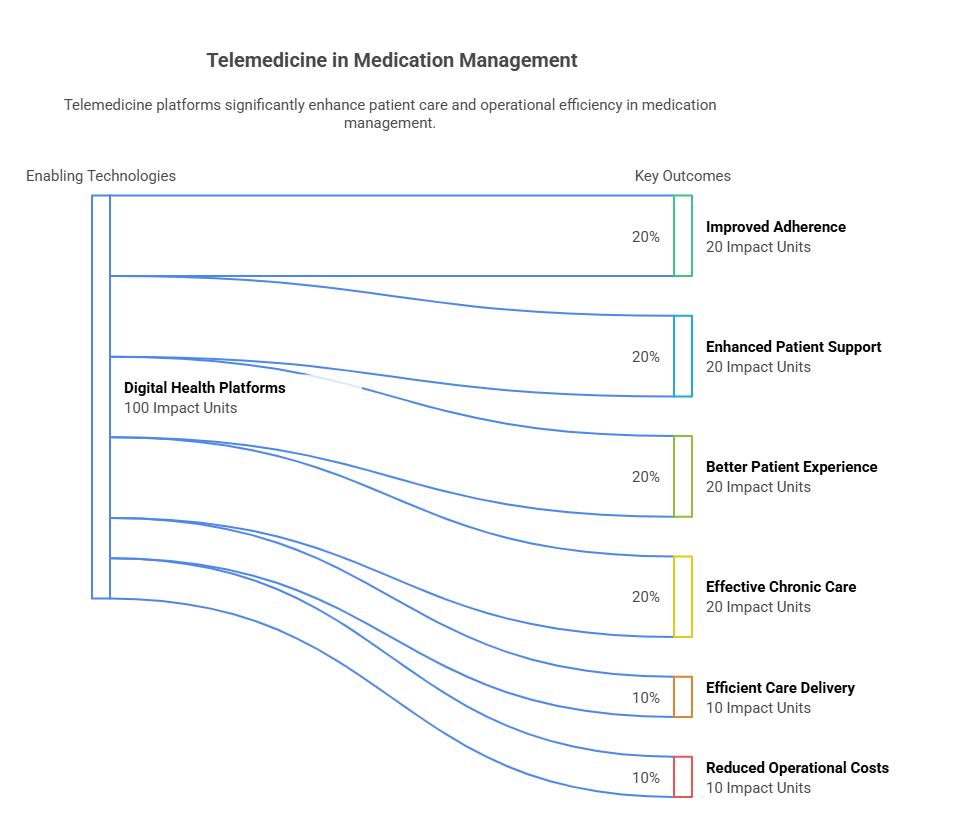
Digital healthcare is no longer limited to standalone applications. Medication tracking platforms are increasingly integrated with virtual healthcare ecosystems powered by Telemedicine App Development Services.
Telemedicine integration allows healthcare providers to:
- Review medication adherence remotely
- Conduct virtual follow-up consultations
- Monitor chronic disease patients in real time
- Adjust treatment plans instantly
- Improve patient communication
For patients managing conditions such as diabetes, hypertension, or cardiovascular disease, these connected systems provide continuous support without requiring frequent hospital visits.
Remote Patient Care is Becoming the New Standard
The demand for remote healthcare solutions accelerated significantly after the global pandemic. Patients now expect convenient digital healthcare experiences that offer accessibility, speed, and personalization.
AI-powered medication tracking software supports this shift by enabling:
- Digital prescriptions
- Automated medication scheduling
- Remote adherence monitoring
- Secure health data sharing
- Virtual patient engagement
Healthcare providers can deliver more efficient care while reducing administrative burden and operational costs.
Key Features of Modern AI-Powered Medication Tracking Software
The future of digital health depends heavily on intelligent features that enhance patient engagement and simplify medication management.
Smart Medication Reminders
Traditional reminder systems are evolving into adaptive AI-driven notifications that consider patient routines, location, and behavior patterns.
For example, if a patient is traveling or sleeping, the system can intelligently reschedule alerts to improve response rates.
Drug Interaction Detection
AI systems can identify harmful drug interactions by analyzing prescription combinations and patient medical history. This feature significantly improves patient safety and reduces medication-related complications.
Automated Prescription Refills
Medication tracking software can automatically notify pharmacies and healthcare providers when prescription refills are needed. This minimizes treatment interruptions and improves continuity of care.
Family and Caregiver Access
Caregivers can receive medication adherence updates and emergency alerts for elderly or vulnerable patients. This creates a collaborative healthcare environment that supports better patient outcomes.
Data Analytics Dashboards
Healthcare providers can access comprehensive dashboards showing:
- Patient adherence rates
- Treatment progress
- Medication history
- Risk indicators
- Health trend analysis
These insights help clinicians make informed decisions faster.
Benefits of AI-Powered Medication Tracking Software
The adoption of intelligent medication management platforms offers substantial advantages for patients, healthcare providers, and healthcare organizations alike.
Improved Patient Adherence
Automated reminders and AI-driven engagement strategies help patients follow treatment plans more consistently.
Reduced Hospital Readmissions
Better medication adherence reduces complications and prevents avoidable emergency visits or hospitalizations.
Enhanced Patient Engagement
Interactive interfaces, personalized insights, and real-time support encourage patients to take an active role in managing their health.
Increased Operational Efficiency
Healthcare organizations can automate repetitive administrative tasks, allowing providers to focus more on patient care.
Better Chronic Disease Management
AI-powered tracking systems are especially effective for managing chronic illnesses requiring long-term medication adherence.
Real-World Use Cases of AI in Medication Tracking
Healthcare organizations worldwide are already leveraging AI-driven medication management systems to improve patient care.
Diabetes Management Applications
Patients with diabetes often require multiple medications and continuous glucose monitoring. AI-powered apps can analyze glucose trends, monitor medication schedules, and recommend lifestyle adjustments.
Mental Health Treatment Support
Medication adherence is particularly important in mental health treatment. AI systems can monitor behavioral patterns and detect early signs of treatment discontinuation or emotional distress.
Elderly Care Solutions
Senior citizens managing multiple prescriptions benefit significantly from intelligent medication tracking tools with voice reminders, caregiver connectivity, and emergency notifications.
Post-Surgical Recovery Monitoring
Hospitals can use medication tracking software to monitor patients recovering at home after surgery. Automated alerts help ensure pain medications and antibiotics are taken correctly.
Challenges in Implementing AI-Powered Healthcare Solutions
Despite the growing adoption of AI-driven healthcare technologies, several challenges still need to be addressed.
Data Privacy and Security Concerns
Healthcare data is highly sensitive, making cybersecurity a top priority. Organizations must ensure compliance with healthcare regulations and implement robust data protection protocols.
Integration with Legacy Systems
Many healthcare providers still rely on outdated systems that may not integrate easily with modern AI-powered platforms.
Patient Technology Adoption
Not all patients are comfortable using digital healthcare tools, especially older populations with limited technological experience.
Regulatory Compliance
Healthcare software developers must comply with strict regulations and standards when building digital health solutions.
How Healthcare Software Companies are Driving Innovation
The rapid growth of digital healthcare solutions is being fueled by leading Healthcare Software Development Companies USA that specialize in AI-driven healthcare technologies.
These companies are helping healthcare providers:
- Build scalable digital health ecosystems
- Develop HIPAA-compliant applications
- Integrate AI and machine learning capabilities
- Improve patient engagement platforms
- Enable remote patient monitoring
Their expertise is accelerating healthcare transformation while improving accessibility and efficiency across the industry.
The Role of Custom Software Development in Healthcare Innovation
Every healthcare organization has unique operational requirements, patient demographics, and clinical workflows. This is why many providers are turning to a Custom Software Development Company in USA for tailored digital healthcare solutions.
Custom medication tracking software offers advantages such as:
- Personalized workflows
- Flexible integrations
- Advanced security controls
- Scalable infrastructure
- Improved user experience
- Industry-specific functionality
Unlike generic healthcare applications, custom-built platforms can evolve alongside organizational needs and emerging healthcare trends.
Future Trends in AI-Powered Medication Tracking Software
The future of digital health will be shaped by continuous innovation in artificial intelligence, data analytics, and connected healthcare technologies.
AI-Driven Predictive Healthcare
Future medication tracking systems will predict health risks before symptoms appear by analyzing behavioral and biometric data patterns.
Blockchain for Healthcare Security
Blockchain technology may enhance data security and improve transparency in prescription management and patient records.
Integration with Smart Devices
Medication tracking software will increasingly integrate with smartwatches, IoT devices, and wearable health sensors for continuous monitoring.
Digital Therapeutics
AI-powered platforms may eventually deliver personalized treatment recommendations and behavioral interventions alongside medication management.
Advanced Natural Language Processing
Conversational AI will become more sophisticated, enabling virtual healthcare assistants to provide human-like patient support and education.
Why Businesses Should Invest in AI-Powered Healthcare Solutions
The digital health market continues to grow rapidly as healthcare providers seek innovative solutions to improve patient care and operational efficiency.
Businesses investing in AI-powered medication tracking software can benefit from:
- Growing healthcare technology demand
- Increased patient engagement
- Scalable healthcare services
- Better data-driven decision-making
- Competitive market differentiation
As healthcare systems worldwide continue transitioning toward patient-centric care models, intelligent medication management platforms will play a critical role in shaping the future of healthcare delivery.
Conclusion
AI-powered medication tracking software is transforming the future of digital healthcare by improving medication adherence, enabling personalized care, and supporting remote patient monitoring. These intelligent solutions are helping healthcare providers deliver better patient outcomes while reducing operational complexity and healthcare costs.
As artificial intelligence continues advancing, medication management platforms will become even more predictive, connected, and personalized. From chronic disease management to virtual healthcare integration, the future of digital health depends heavily on smart technologies that empower both patients and healthcare providers.
Organizations that embrace AI-driven healthcare innovation today will be better positioned to meet evolving patient expectations and stay competitive in the rapidly changing healthcare landscape.
Ready to Build the Future of Digital Healthcare?
Whether you are planning to launch a smart medication tracking platform, enhance remote patient monitoring, or create a next-generation healthcare application, investing in intelligent healthcare technology can drive long-term growth and patient satisfaction.
Partner with experienced healthcare technology experts to develop secure, scalable, and AI-powered healthcare solutions that redefine modern patient care.