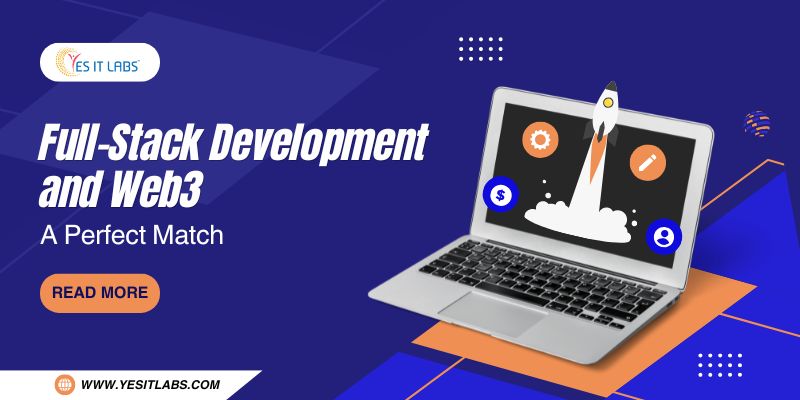
The internet is evolving at a rapid pace. Traditional web applications, often referred to as Web2, rely on centralized servers, databases, and platforms to store and manage data. Web3 introduces a different approach by leveraging blockchain technology, smart contracts, and decentralized networks to give users greater control over their data, assets, and digital identities.
As businesses continue exploring blockchain-powered solutions, the demand for developers who can build both traditional web applications and decentralized platforms is growing significantly. This is why full-stack development and Web3 have become such a powerful combination.
A full-stack developer already possesses the skills required to build complete applications from the user interface to the backend infrastructure. By adding Web3 knowledge to their skill set, these developers can create innovative decentralized applications that combine modern user experiences with blockchain functionality.
Understanding Full-Stack Development
Full-stack development involves working on every layer of a web application. Instead of focusing solely on the frontend or backend, full-stack developers understand how all components work together to create a seamless digital experience.
Frontend Development
Frontend development focuses on the user-facing side of an application. This includes everything users see and interact with.
Common frontend technologies include:
- HTML
- CSS
- JavaScript
- React
- Angular
- Vue.js
- TypeScript
Frontend developers create responsive interfaces, interactive features, and optimized user experiences across devices.
Backend Development
Backend development powers the functionality behind the scenes.
Common backend technologies include:
- Node.js
- Python
- PHP
- Java
- Express.js
- GraphQL
- REST APIs
Backend systems handle data processing, authentication, business logic, and communication between various services.
Database Management
Applications require databases to store and organize information.
Popular database solutions include:
- MySQL
- PostgreSQL
- MongoDB
- Redis
DevOps and Deployment
Modern applications also require infrastructure management.
Important tools include:
- Docker
- Kubernetes
- AWS
- Microsoft Azure
- CI/CD pipelines
Because full-stack developers understand the entire development lifecycle, they are well-positioned to transition into Web3 development.
What Is Web3?
Web3 is the next generation of the internet built around decentralization, transparency, and user ownership.
Unlike traditional applications that rely on centralized organizations to manage data and transactions, Web3 applications use blockchain networks that distribute information across thousands of computers worldwide.
Key technologies powering Web3 include:
- Blockchain networks
- Smart contracts
- Decentralized Finance (DeFi)
- Non-Fungible Tokens (NFTs)
- Decentralized Autonomous Organizations (DAOs)
- Cryptocurrency wallets
- Decentralized storage systems
The primary goal of Web3 is to create systems where users maintain greater control over their digital assets and personal information while reducing dependence on centralized intermediaries.
Why Full-Stack Development and Web3 Are a Perfect Match
Many people assume that Web3 development revolves entirely around writing smart contracts. While smart contracts are important, they represent only one component of a successful decentralized application.
Users still expect:
- Fast loading times
- Intuitive interfaces
- Secure authentication
- Mobile responsiveness
- Smooth user experiences
- Reliable performance
Blockchain technology alone cannot deliver these experiences.
A successful Web3 application typically combines traditional web technologies with decentralized infrastructure.
| Layer |
Common Technologies |
|
Frontend |
React, Next.js, Vue |
|
Wallet Integration |
MetaMask, WalletConnect |
|
Smart Contracts |
Solidity, Rust |
|
Blockchain Networks |
Ethereum, Polygon, Solana |
|
Backend Services |
Node.js, Python |
|
Storage Solutions |
IPFS, Arweave |
| APIs |
GraphQL, REST |
Because full-stack developers already understand most of these components, learning Web3 becomes a natural progression.
As organizations increasingly adopt decentralized technologies, many business leaders choose to hire Full Stack web developers in USA markets because these professionals can manage frontend development, backend architecture, blockchain integrations, APIs, and deployment workflows within a single project. This broad technical expertise often reduces development complexity and improves project efficiency.
How Full-Stack Developers Add Value to Web3 Projects
Building Better User Experiences
One of the biggest challenges in Web3 adoption is usability.
Many blockchain applications are technically impressive but difficult for everyday users to navigate.
Full-stack developers can simplify:
- Wallet connections
- Transaction workflows
- Dashboard experiences
- Mobile accessibility
- User onboarding
The easier a Web3 application is to use, the more likely it is to attract mainstream users.
Connecting Blockchain and Traditional Systems
Many organizations are not ready to move entirely to decentralized infrastructure.
Instead, they often adopt hybrid solutions that combine:
- Traditional databases
- Cloud services
- APIs
- Blockchain networks
Full-stack developers understand how to connect these systems efficiently.
Managing Performance and Scalability
Blockchain transactions can be slower and more expensive than traditional database operations.
Full-stack developers can improve performance through:
- Caching strategies
- Efficient API design
- Database optimization
- Layer-2 integrations
- Content delivery networks
These improvements create a better experience for users while reducing operational costs.
Real-World Applications of Full-Stack Web3 Development
Decentralized Finance (DeFi)
DeFi platforms offer blockchain-based alternatives to traditional financial services.
Examples include:
- Lending platforms
- Borrowing services
- Decentralized exchanges
- Yield farming applications
- Asset management tools
Developers must build secure interfaces while integrating complex smart contract functionality.
NFT Marketplaces
NFT platforms allow users to create, buy, sell, and trade digital assets.
Key features often include:
- NFT minting
- Auctions
- Royalties
- Wallet integration
- Marketplace search functions
Building these platforms requires expertise in both frontend development and blockchain technology.
The growing adoption of decentralized applications has also created opportunities for specialized service providers. A reputable Blockchain Development Company in USA can help businesses design secure smart contracts, implement blockchain infrastructure, integrate wallets, and develop scalable decentralized solutions tailored to specific industry requirements.
Blockchain Gaming
Blockchain games introduce true ownership of in-game assets.
Players can:
- Own digital collectibles
- Trade items with other players
- Earn cryptocurrency rewards
- Participate in decentralized economies
Developers must combine traditional gaming infrastructure with blockchain functionality.
Supply Chain Management
Blockchain technology can improve transparency throughout supply chains.
Benefits include:
- Product tracking
- Authenticity verification
- Fraud reduction
- Enhanced accountability
Organizations increasingly explore blockchain solutions to improve operational efficiency and trust.
Digital Identity Platforms
Web3 identity systems allow users to manage their credentials without relying on centralized providers.
Potential benefits include:
- Improved privacy
- Better security
- Reduced identity theft risks
- Greater control over personal information
Essential Skills for Full-Stack Web3 Developers
Frontend Development Skills
Modern Web3 applications often rely heavily on frontend frameworks.
Developers should become comfortable with:
- React
- Next.js
- TypeScript
- Tailwind CSS
React remains one of the most widely used frameworks in the Web3 ecosystem.
Blockchain Fundamentals
Before developing decentralized applications, it is important to understand:
- Blocks and transactions
- Consensus mechanisms
- Gas fees
- Wallets
- Network architecture
- Token standards
A strong understanding of blockchain fundamentals helps developers make better technical decisions.
Smart Contract Development
Smart contracts are self-executing programs deployed on blockchain networks.
Popular smart contract languages include:
- Solidity for Ethereum-based networks
- Rust for Solana-based applications
Developers should also learn:
- Smart contract testing
- Security auditing
- Deployment processes
- Contract optimization
Web3 Libraries and Frameworks
Several tools simplify blockchain integration.
Popular options include:
- Ethers.js
- Web3.js
- Wagmi
- Viem
- Hardhat
- Foundry
These tools streamline development and improve productivity.
Security Best Practices
Security is particularly important in Web3 because transactions are often irreversible.
Developers should understand:
- Reentrancy attacks
- Access control vulnerabilities
- Flash loan attacks
- Secure wallet integrations
- Smart contract audits
A single vulnerability can result in significant financial losses.
Industry Statistics Highlighting the Opportunity
The growth of Web3 continues to create new opportunities for developers worldwide.
Key Industry Insights
- More than 22,000 developers actively contribute to blockchain and crypto ecosystems each month.
- Over 8,000 developers work full-time on open-source blockchain projects.
- The blockchain industry is projected to grow substantially throughout the remainder of the decade.
- Web3 job opportunities have expanded significantly as businesses continue investing in decentralized technologies.
- Remote work remains highly prevalent across blockchain and Web3 organizations.
- India has become one of the fastest-growing hubs for blockchain development talent globally.
These trends suggest that developers who understand both traditional web technologies and blockchain systems will remain highly valuable in the years ahead.
Challenges in Full-Stack Web3 Development
While the opportunities are significant, developers should also understand the challenges.
Rapid Technological Change
The Web3 ecosystem evolves quickly.
New protocols, frameworks, and development tools emerge regularly, requiring continuous learning.
Security Risks
Blockchain applications often handle valuable digital assets.
Even minor coding mistakes can have serious consequences.
Scalability Concerns
Some blockchain networks still face limitations related to:
- Transaction speed
- Throughput
- Network congestion
- Transaction costs
Developers must design solutions that minimize these issues.
Regulatory Uncertainty
Blockchain regulations continue to evolve across different countries and jurisdictions.
Developers and businesses must stay informed about legal requirements.
User Adoption Challenges
Many users remain unfamiliar with:
- Wallet management
- Private keys
- Gas fees
- Blockchain transactions
Creating intuitive experiences remains one of the industry’s most important goals.
The Future of Full-Stack Web3 Development
The future of web development is unlikely to be fully centralized or fully decentralized. Instead, many organizations will adopt hybrid architectures that combine the strengths of both approaches.
Future applications may integrate:
- Artificial intelligence
- Blockchain verification
- Decentralized identity systems
- Cloud computing
- Traditional databases
- Tokenized digital economies
Despite the rise of blockchain technology, traditional web infrastructure remains essential for many applications. As a result, businesses often work with a Custom Web Development Company in USA to build hybrid solutions that combine cloud-based services, modern web frameworks, and decentralized technologies into a unified digital ecosystem.
As these technologies converge, developers who understand both full-stack engineering and Web3 infrastructure will play a critical role in building next-generation digital products.
Companies increasingly seek professionals who can bridge the gap between conventional software development and emerging blockchain technologies. This trend is expected to continue as Web3 adoption expands across finance, healthcare, gaming, logistics, and enterprise software.
Final Thoughts
Full-stack development and Web3 complement each other exceptionally well because modern decentralized applications require much more than smart contracts. Successful Web3 products depend on intuitive interfaces, scalable backend systems, secure infrastructure, efficient APIs, and seamless blockchain integration.
Developers who combine full-stack expertise with Web3 skills gain the ability to build complete decentralized solutions from start to finish. They can create better user experiences, solve complex technical challenges, and position themselves for opportunities in one of the fastest-growing segments of the technology industry.
Whether you are building a decentralized finance platform, NFT marketplace, blockchain-powered game, digital identity solution, or enterprise blockchain application, mastering both full-stack development and Web3 can provide a significant competitive advantage and open the door to the future of the internet.