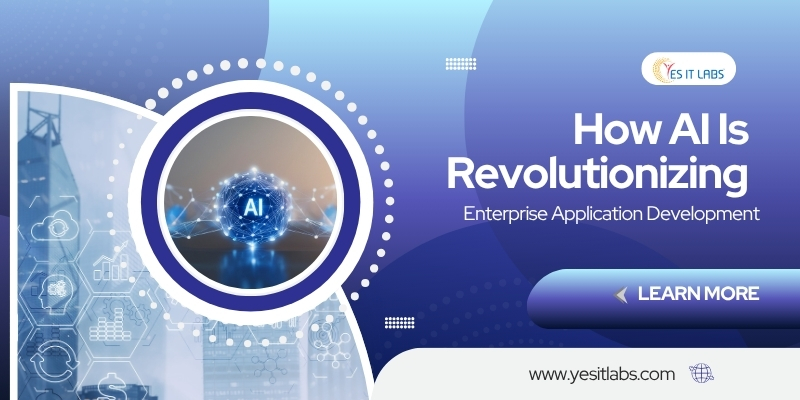
In today’s digital-first economy, enterprises are under constant pressure to innovate, improve operational efficiency, and deliver exceptional customer experiences. Traditional software development approaches, while effective, often struggle to keep pace with rapidly evolving business requirements. This is where Artificial Intelligence (AI) is transforming the landscape of enterprise application development.
From automating coding processes and enhancing decision-making to enabling predictive analytics and personalized user experiences, AI is reshaping how businesses build, deploy, and manage enterprise applications. Organizations across industries are leveraging intelligent technologies to accelerate development cycles, reduce costs, and gain a competitive advantage.
This article explores how AI is revolutionizing enterprise application development, the benefits it offers, key challenges, real-world applications, and future trends that businesses should watch.
Understanding AI in Enterprise Application Development
Artificial Intelligence refers to technologies that enable machines to simulate human intelligence, including learning, reasoning, problem-solving, and decision-making. When integrated into enterprise applications, AI helps automate complex processes, analyze large datasets, and deliver actionable insights.
Modern enterprise applications are no longer limited to performing predefined functions. AI-powered systems can learn from user behavior, identify patterns, predict outcomes, and continuously improve performance.
Today, organizations are increasingly investing in AI Software Development Services to create intelligent applications capable of adapting to dynamic business environments and evolving customer expectations.
Why Enterprises Are Embracing AI-Powered Applications
The demand for intelligent business solutions continues to grow as companies seek greater efficiency and innovation.
Several factors are driving AI adoption in enterprise software development:
- Rising volumes of business data
- Increasing demand for automation
- Need for personalized customer experiences
- Growing complexity of business operations
- Competitive pressure to innovate faster
- Demand for real-time decision-making
According to industry reports, AI adoption among enterprises has accelerated significantly in recent years, with organizations reporting improvements in productivity, customer satisfaction, and operational efficiency.
Key Ways AI Is Transforming Enterprise Application Development
Accelerating Software Development Cycles
One of AI’s most significant contributions is its ability to streamline software development processes.
AI-powered development tools can:
- Generate code snippets automatically
- Detect bugs during development
- Recommend coding improvements
- Automate software testing
- Optimize deployment workflows
By reducing manual effort, development teams can focus on strategic innovation rather than repetitive tasks. This results in faster project delivery and improved software quality.
Enhancing Application Performance
AI continuously monitors application behavior and identifies performance bottlenecks before they impact users.
Benefits include:
- Predictive maintenance
- Automated issue detection
- Resource optimization
- Intelligent workload balancing
- Reduced system downtime
These capabilities ensure enterprise applications remain reliable, scalable, and efficient.
Improving User Experience Through Personalization
Modern users expect personalized experiences across digital platforms.
AI helps enterprise applications deliver customized experiences by:
- Analyzing user behavior
- Predicting customer preferences
- Recommending relevant content
- Automating customer support
- Personalizing workflows
Whether it’s an employee portal, e-commerce platform, or business management system, AI enables applications to adapt to individual user needs.
Intelligent Data Analytics
Businesses generate enormous amounts of data daily. Traditional analytics methods often struggle to extract meaningful insights from this information.
AI-powered analytics can:
- Process large datasets rapidly
- Identify hidden patterns
- Forecast business trends
- Generate predictive insights
- Support strategic decision-making
As a result, enterprises can make data-driven decisions with greater confidence and accuracy.
AI in Enterprise Resource Planning Systems
Enterprise Resource Planning (ERP) systems are critical for managing business operations, including finance, inventory, procurement, and human resources.
Modern ERP Software Development Services are increasingly integrating AI capabilities to improve operational efficiency and business intelligence.
AI-powered ERP systems can:
Automate Routine Tasks
Repetitive processes such as invoice processing, payroll management, and inventory updates can be automated, reducing administrative workloads.
Predict Demand More Accurately
Machine learning algorithms analyze historical sales data, seasonal trends, and market conditions to forecast demand.
Improve Supply Chain Management
AI identifies potential disruptions, optimizes inventory levels, and recommends corrective actions to minimize operational risks.
Enhance Financial Planning
Predictive analytics helps businesses forecast revenue, manage budgets, and identify financial opportunities more effectively.
These advancements enable organizations to operate more efficiently while reducing costs and improving strategic planning.
Transforming Customer Relationship Management with AI
Customer relationships play a vital role in business success. AI is significantly enhancing CRM systems by enabling smarter customer engagement and data-driven sales strategies.
Organizations seeking Custom CRM Software Development Services are increasingly incorporating AI features to improve customer acquisition, retention, and satisfaction.
Intelligent Lead Scoring
AI evaluates customer behavior and historical interactions to identify high-potential leads.
Predictive Customer Insights
Businesses can anticipate customer needs and proactively address concerns before they arise.
AI-Powered Chatbots
Virtual assistants provide instant support, answer common questions, and improve customer engagement around the clock.
Personalized Marketing Campaigns
AI analyzes customer preferences and recommends targeted marketing strategies that increase conversion rates.
These capabilities help businesses build stronger relationships while maximizing revenue opportunities.
Real-World Applications of AI in Enterprise Development
AI is delivering measurable value across multiple industries.
Healthcare
Healthcare organizations use AI-powered enterprise applications for:
- Patient data analysis
- Predictive diagnostics
- Appointment scheduling
- Medical imaging support
- Resource management
These solutions improve patient outcomes while enhancing operational efficiency.
Manufacturing
Manufacturers leverage AI to:
- Predict equipment failures
- Optimize production schedules
- Improve quality control
- Reduce downtime
- Enhance supply chain visibility
Financial Services
Financial institutions utilize AI for:
- Fraud detection
- Risk assessment
- Automated customer support
- Credit scoring
- Investment forecasting
Retail and E-commerce
Retailers use AI-driven applications to:
- Personalize shopping experiences
- Manage inventory
- Forecast demand
- Optimize pricing
- Improve customer service
These examples demonstrate AI’s ability to transform enterprise operations across diverse sectors.
The Role of Mobile Applications in AI-Driven Enterprises
As mobile technology becomes central to business operations, enterprises are increasingly integrating AI into mobile applications.
A leading Mobile App Development Company in USA often incorporates AI features such as:
- Voice recognition
- Predictive search
- Personalized recommendations
- Real-time analytics
- Intelligent automation
AI-powered mobile applications enable employees and customers to access smarter, faster, and more intuitive digital experiences from anywhere.
For enterprises embracing remote work and digital transformation, intelligent mobile solutions are becoming essential business tools.
Benefits of AI in Enterprise Application Development
Organizations investing in AI-powered applications experience numerous advantages.
Increased Productivity
Automation reduces manual workloads, allowing employees to focus on high-value tasks.
Faster Decision-Making
Real-time insights and predictive analytics support quicker, more informed business decisions.
Reduced Development Costs
AI streamlines coding, testing, and maintenance processes, lowering overall development expenses.
Improved Accuracy
Machine learning algorithms minimize human error and enhance operational precision.
Enhanced Scalability
AI systems can adapt to growing business demands without requiring extensive infrastructure changes.
Better Customer Experiences
Personalized interactions improve customer satisfaction and strengthen brand loyalty.
These benefits make AI a strategic investment for businesses seeking sustainable growth.
Challenges of Implementing AI in Enterprise Applications
Despite its advantages, AI adoption comes with several challenges.
Data Quality Issues
AI systems depend on accurate and relevant data. Poor-quality data can negatively impact performance and decision-making.
Solution: Establish robust data governance frameworks and data validation processes.
Integration Complexity
Integrating AI with legacy systems can be technically challenging.
Solution: Adopt phased implementation strategies and modern integration architectures.
Security and Privacy Concerns
AI applications often process sensitive business and customer information.
Solution: Implement strong cybersecurity measures, encryption protocols, and compliance frameworks.
Talent Shortages
Organizations may struggle to find skilled AI professionals.
Solution: Partner with experienced technology providers and invest in workforce training.
Addressing these challenges proactively ensures successful AI implementation and long-term value creation.
Emerging AI Trends Shaping Enterprise Development
AI technology continues to evolve rapidly.
Key trends influencing the future of enterprise application development include:
Generative AI
Generative AI tools are helping developers create code, documentation, and user interfaces more efficiently.
AI-Augmented Development
AI assistants are becoming integral to software development workflows, improving productivity and code quality.
Hyperautomation
Organizations are combining AI, robotic process automation (RPA), and machine learning to automate end-to-end business processes.
Conversational AI
Advanced virtual assistants and chatbots are transforming customer and employee interactions.
Predictive Business Intelligence
AI-powered analytics platforms are providing deeper forecasting capabilities and strategic insights.
Enterprises that embrace these innovations will be better positioned to compete in increasingly digital markets.
Best Practices for Successful AI Adoption
To maximize AI’s impact, organizations should follow several key practices:
- Define clear business objectives
- Start with high-value use cases
- Ensure data quality and accessibility
- Invest in employee training
- Prioritize security and compliance
- Measure outcomes continuously
- Partner with experienced technology experts
A strategic approach helps organizations achieve faster returns on investment and sustainable business growth.
Conclusion
Artificial Intelligence is fundamentally transforming enterprise application development by enabling smarter automation, predictive analytics, personalized experiences, and faster software delivery. From ERP and CRM platforms to mobile applications and advanced business intelligence systems, AI is helping organizations operate more efficiently and make better decisions.
As businesses continue to pursue digital transformation, AI-powered enterprise applications will become increasingly essential for maintaining competitiveness and delivering exceptional customer experiences. Companies that invest in intelligent technologies today will be better prepared to navigate future challenges and seize new opportunities.
Whether you’re modernizing legacy systems, building intelligent business platforms, or developing next-generation digital solutions, embracing AI is no longer optional it’s a strategic necessity for long-term success.
Ready to Transform Your Enterprise with AI?
Partner with experienced technology experts to build intelligent, scalable, and future-ready enterprise applications. From AI-powered automation and predictive analytics to customized ERP, CRM, and mobile solutions, the right development strategy can unlock new levels of efficiency, innovation, and business growth. Start your AI transformation journey today and stay ahead in the rapidly evolving digital landscape.
Frequently Asked Questions (FAQs)
1. How does AI improve enterprise application development?
AI improves enterprise application development by automating coding, testing, debugging, analytics, and decision-making processes. It helps reduce development time, improve software quality, and enhance user experiences.
2. What industries benefit most from AI-powered enterprise applications?
Industries such as healthcare, manufacturing, retail, finance, logistics, and telecommunications benefit significantly from AI-powered enterprise applications due to their reliance on data-driven operations and automation.
3. Can AI be integrated into existing enterprise software?
Yes. AI can be integrated into existing enterprise systems through APIs, machine learning models, cloud platforms, and intelligent automation tools, enabling businesses to enhance functionality without replacing entire systems.
4. What are the biggest challenges of AI implementation?
Common challenges include data quality issues, integration complexities, cybersecurity concerns, compliance requirements, and shortages of skilled AI professionals.
5. Is AI suitable for small and medium-sized businesses?
Absolutely. AI solutions are becoming more accessible and affordable, allowing small and medium-sized businesses to improve productivity, customer service, and decision-making without large infrastructure investments.
6. What is the future of AI in enterprise application development?
The future includes greater adoption of generative AI, hyperautomation, predictive analytics, conversational AI, and AI-assisted software development, making enterprise applications smarter, faster, and more efficient.